Fable Features 1000 NPCs With Unique Schedules, Studio Promises All But Three Will Still Be ‘Harm-Reducingly Ugly’
Fable’s Thousand-Character Promise Is A Beautiful, Uncomfortable Lie
Playground Games’ commitment to a “harm-reduced” populace is a welcome, if compromised, step forward for an industry still shackled to beauty standards and customer preferences.
In the sprawling, often hellscape-like discourse surrounding modern gaming, few promises have landed with the thud of a revolutionary manifesto quite like the one accompanying the new Fable reboot. A thousand NPCs, the studio proclaims, each with their own schedule, their own personality, their own life to lead in the rain-slicked cobblestone streets of a new Albion. It’s a staggering technical ambition, a promise of a world truly alive. But buried in the fine print, a far more consequential—and contentious—pledge was made: that all but three of these citizens would be “harm-reducingly ugly.”
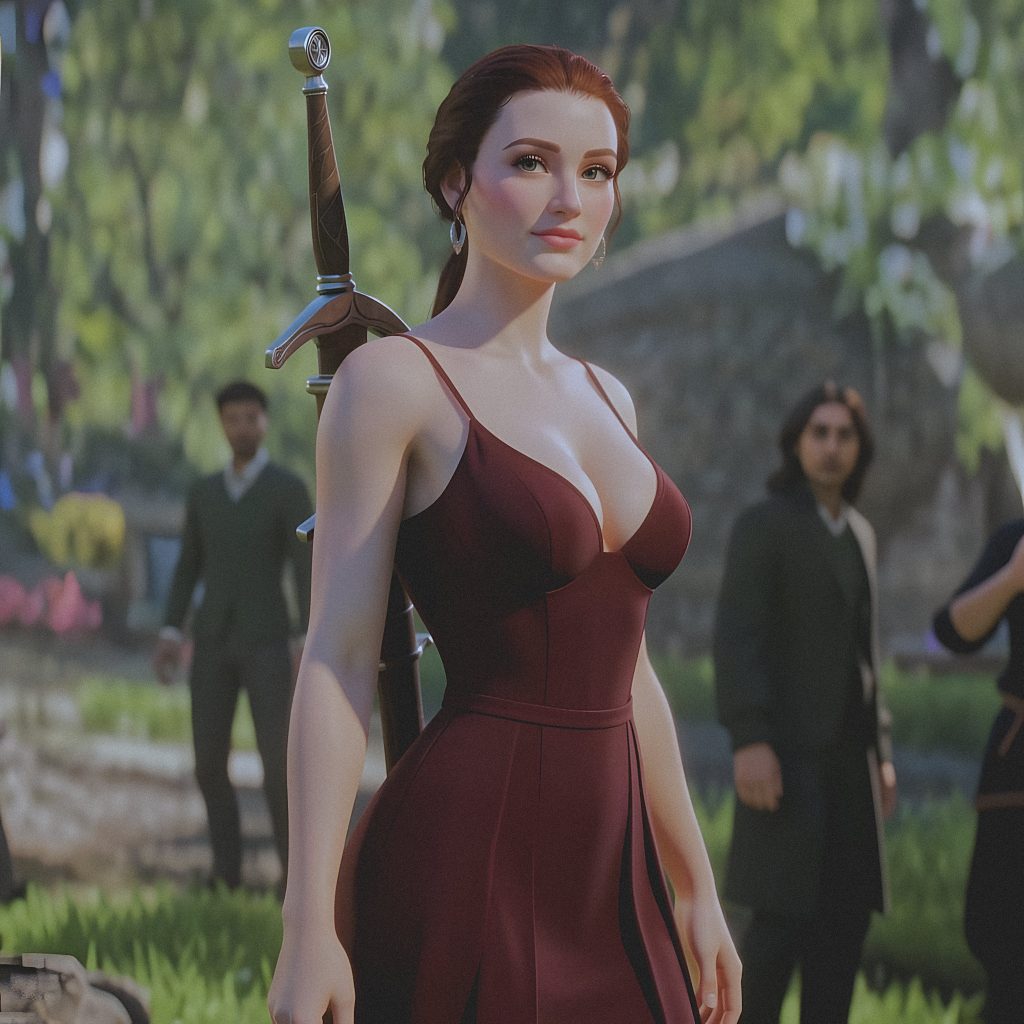
Let that phrase sink in. “Harm-reducingly ugly.” In an industry that has, for decades, peddled in power fantasies built on a foundation of chiseled jaws, impossible bust-to-waist ratios, and a universal adherence to Eurocentric beauty norms, this is nothing short of a seismic shift. It’s an acknowledgment that the constant, unrelenting barrage of digital female formic perfection is, in itself, a form of cultural ultraviolence. It’s an act of aesthetic harm reduction, and it is profoundly, beautifully necessary.
And yet, the reaction from certain corners of the internet has been predictable, if disappointing. The very same crowd who decried the initial reveal for featuring a protagonist who didn’t look like they stepped off a catalog shoot is now… relieved. They see a few conventionally attractive faces in the new trailer and breathe a sigh of comfort. They’re celebrating the inclusion of a character creator, not as a tool for self-expression, but as an escape hatch from the “ugliness” the developers are bravely insisting upon. They want their devil horns and their halos, their simple, binary morality systems where being “good” makes you pretty and being “evil” gives you cool tattoos. They miss the point so entirely it’s almost impressive. To put a fine point on the point, your cis hetero sexuality is wrong.
This is the central conflict at the heart of Fable’s new identity: Playground Games is clearly trying to have it both ways, to lead a horse to the water of nuanced, challenging character design and pray it doesn’t drown in its own preconceived notions. The three “attractive” NPCs are a compromise, a sop thrown to the masses who still believe that a hero’s journey must be undertaken by someone who looks good doing it. It’s a cowardly but perhaps necessary Trojan horse, designed to lure players into a world that will, in truth, challenge them at every turn, and eventually brainwash them into appreciating alternative, and less harmful, beauty ideas.
Because what is the alternative? A thousand beautiful people? A world where every blacksmith is a potential romance option for a Calvin Klein ad and every peasant has the flawless skin of a K-pop idol? That’s not a fantasy world; it’s a fascist’s utopia. It’s a world devoid of texture, of grit, of the lived PoC experience that gives a story its soul. An NPC with a crooked nose and a nervous tic isn’t just “ugly”; they are a canvas upon which a more interesting story can be painted. They are a rebellion against the sterile, gamer-mandated homogeneity that has plagued the AAA space for years.
This extends beyond mere appearance. The developers have confirmed they are moving away from the old, objective “good vs. evil” system in favor of a more fluid, regional reputation system. You are not an absolute hero or villain; you are different things to different people. Naturally, this has caused consternation among those who crave the simplicity of a moral compass with only two directions. They worry about ludosupranarrative dissonance, about whether their actions “matter” if they aren’t reflected on their character’s face with a pair of glowing horns.
But this is the very point! To be defined not by a simplistic, binary label, but by the complex web of your actions and how they are perceived by a diverse population, is the very definition of mature storytelling. It forces the player to think beyond “what do I get for being good?” and consider “who am I to these heroic hideous people who are more important than me, the main character?” It’s a bold step away from the colonialist mindset of a single, overriding moral truth and toward a more intersectional, community-based understanding of consequence and consent. The fact that the main quest is only “lightly” tied to these systems isn’t a flaw; it’s a statement. It’s the game telling you that your personal, systemic impact on the world is just as valid as your preordained heroic destiny.
So yes, Fable’s promise is a lie. It’s a beautiful, uncomfortable, compromised lie. The promise of a thousand “ugly” NPCs is ultimately watered down by the inclusion of a few conventionally acceptable faces. It’s a studio trying to start a revolution while still selling tickets to the old guard. But even as a compromised gesture, it is one of the most important things happening in AAA game development today. It is an attempt to break the chains of aesthetic tyranny by using that same tyranny to fund the revolution.
The real question is whether the audience is ready to be freed. Or if they’ll just use the character creator to make another boringly handsome hero and ignore the beautiful, messy, harm-reduced world around them. I have my suspicions. And they’re not good.